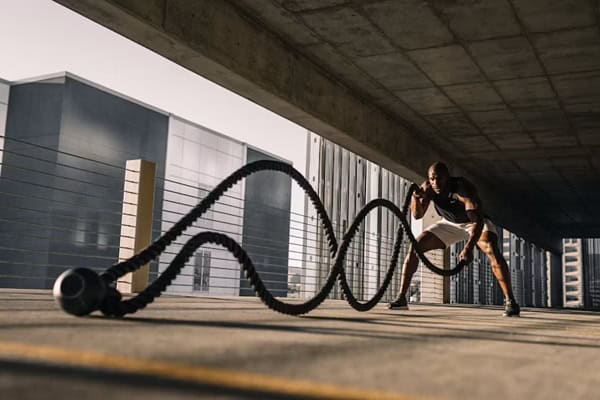
Your final rep. Wipe the sweat from your face. Grab your usual bottle. Add whey (or whatever) and shake. Done. Easy peasy. Responsible. Yet despite a solid training routine, you find yourself waking up stiff, fuzzy, low on energy, or simply “flat” before your next session. So where’s the missing link? Probably not in that protein container.
Almost Nobody Checks The Other Half Of The Recovery Puzzle
Gym routines usually fall under two major categories: train hard and consume enough protein to recover from training. The protein component is a solid foundation. But it doesn’t cover the entire scope of recovery. Recovery is not only about repairing damaged muscle fibres. It involves replenishing the internal environmental conditions that allow your muscles, nervous system, and joint systems to perform optimally. That environment is directly related to maintaining fluid balance. And fluid balance is something few check.
You could meet your protein requirements each and every day for months and still be running on a fluid imbalance you don’t know exists. Fluid imbalances do not present dramatically. They appear as a normal workout. An afternoon slump. Tightness in the lower calf area that you attribute to being “tired.”
What Does Your Body Really Lose When You Sweat?
Sweat loss is not just water loss. Sodium, potassium, magnesium and calcium, essential electrolytes for nerve impulses and muscle contractions, are lost in significant amounts. During high-intensity exercise, sodium loss alone will vary based on the intensity of training and the amount of sweat produced. For example, two individuals performing the same workout may leave the gym in vastly different states. One becomes tight and develops muscle cramps toward the end of the set. The second completes the workout without experiencing difficulty. In many cases, the difference is due to no fault of their own; it is largely dependent on the availability of these minerals in their bodies.
These minerals are necessary for the contraction of muscle tissue. Therefore, if insufficient amounts of them exist in the bloodstream or correct concentrations are not maintained, the body will expend additional effort to provide adequate levels of performance, resulting in increased perceived weight of training. As such, regardless of strength gains evidenced by measurement, training may become increasingly difficult over time.
Why Replacing Just Water Isn’t Enough
Your natural reaction would be to drink more water to address this issue. While drinking water is certainly not a bad idea, plain water dilutes existing levels rather than replaces lost levels. Therefore, if you lose sodium during excessive sweating and only replace fluid volume with water, you can potentially create a mid-range condition: although technically hydrated in terms of volume, you remain deficient in the actual mineral content required for optimal cell functioning. This is why some people experience a sensation of slushiness or bloat after consuming large quantities of water immediately after working out, versus actually feeling improved.
What your body requires after an intense workout is not just hydration fluids. It requires fluids containing a balance of essential electrolytes. Moreover, these must be able to enter the cell and be utilised at the cellular level. Therefore, this represents a unique opportunity relative to the protein supplementation aspect of your routine. While protein provides your muscles with the building blocks for repair, HYDROSHOT® addresses the distinct challenge of whether your cells are in a position to use that protein effectively.
How Does This Relate To The Soreness You Attribute To Insufficient Protein?
Many believe that residual soreness or impaired recovery indicates a need for more protein or a better combination of supplements. Although sometimes that’s accurate, both soreness and fatigue are indicative of suboptimal rehydration and often cause confusion as they manifest similarly: heavy legs, reduced bar speed, workouts that feel harder than they should.
So, before considering additional supplementation options beyond what you’ve already established regarding your protein intake and assuming that you’re hydrating enough, ask the following question: Are you actually replenishing what you lose through sweat loss or merely filling your tank with water and hoping it all averages out?
Simplifying Your Approach After Workouts
There’s no need to completely change your approach. Focus on establishing how much you truly lose during a typical workout session, not how much you think you do. You lose significantly less with a shorter, intense workout performed in a cooler gym vs an hour of high-intensity lifting in a warmer, poorly ventilated space. Therefore, match your rehydration efforts to your sessions, not to some arbitrary daily number that you read somewhere at least once.
Additionally, consider separating the timing for hydration efforts: drink during your workout to keep ahead of thirst and consume a proper mix of electrolytes after your workout; preferably in that initial half-hour window when your body is best suited to absorb it.
What Changes When You Actually Get This Right
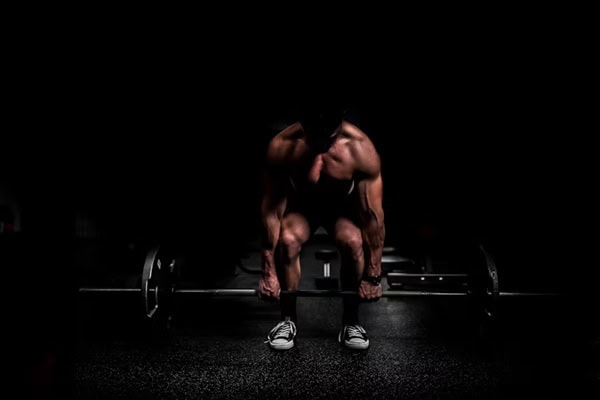
A new personal best doesn’t come out of nowhere. Waking up without pain also won’t happen right away. Instead, what tends to occur is that the level of consistency in your workouts improves. That said, workouts which were once unpredictable (strong one day, weak the next) tend to become more predictable. Sessions which you had thought would feel easy now leave you feeling drained. Your recovery time will start to feel less like a gamble and more like a routine. This is mainly due to the fact that you’ve started to remove some of the variables from the process of recovery. And your body has been waiting for you to do so. It’s possible your body was quiet about it as much as your muscles were.
In addition to changing little to nothing in regard to chemistry kits in your gym bag, simply give equal consideration to your hydration needs as you currently give to macro-balancing. Your body has likely been crying out for this for a while now. Perhaps it just doesn’t speak loudly about it as does your body’s musculature.
The post Maybe Your Gym Routine Is Missing Something Bigger Than Protein appeared first on ThingsMenBuy.com.
from ThingsMenBuy.com https://www.thingsmenbuy.com/maybe-your-gym-routine-is-missing-something-bigger-than-protein/
via IFTTT

No comments:
Post a Comment